If you are searching for how to start an online business as a beginner, you have probably already seen the problem: every page gives you a different answer. One says to start a dropshipping store. Another says to record videos, write a book, sell templates, or become a freelancer. By the third tab you know less than when you began.
This article gives you one order of operations instead: choose a topic you can stay with, learn how a simple website works, and publish your first pieces of content. It also explains where Wealthy Affiliate fits as one place to do those things, and who it is not right for.
Why starting feels so overwhelming (and why it’s not your fault)
Most beginner advice is written by people selling one particular route. A course on e-commerce will tell you e-commerce is the answer, and a course on YouTube will say the same about YouTube. Each is a reasonable path, but you are seeing all of them at once, with no way to tell which suits you.

There is also a vocabulary problem. Terms like niche, funnel, traffic, conversion, and affiliate marketing get used as if everyone knows them. When you do not, every article feels like the middle of a conversation you were not part of.
The third cause is the number of decisions that seem to need answers before you can start: a business name, a platform, a logo, a budget, a target customer. Almost none of these need to be settled on day one. Several of them cannot be settled well until you have done some of the work.
So the confusion is a predictable result of how the information is presented. You do not need to be smarter or braver to get past it. You need a shorter list and a clear first move.
Start with a topic, not a business model
A business model is the way money comes in: selling products, offering services, earning commissions, running ads. A topic is the subject you will spend your time on. Beginners tend to choose the model first and then hunt for a topic to fit it. That order is harder, because the model tells you nothing about whether you will enjoy the daily work.
Choose the topic first. A good beginner topic has three qualities:
- You can keep going with it. You will write and read about it for months. If the idea of your fortieth article on it makes you tired, pick another one.
- People already ask questions about it. If nobody is looking for answers on a subject, a website about it will be hard to build an audience for. Search the topic and look at the questions people type.
- You can be useful on it without being an expert. Beginners often assume they need credentials. A person who has learned a bit more than the reader, and explains it clearly, is often more helpful than a specialist who has forgotten what confused them at the start.
Topics can be broad areas like home cooking, budget travel, dog training, or personal finance basics, and they can be narrower versions of those. Narrower is usually easier to work with, because you can cover it more thoroughly. “Dog training” is huge. “Training an anxious rescue dog to walk on a lead” is a subject where you can answer real questions in detail.
You can change your mind later. A topic is a starting point for learning how everything else works, and the skills you build carry over if you switch.
A quick test for your shortlist
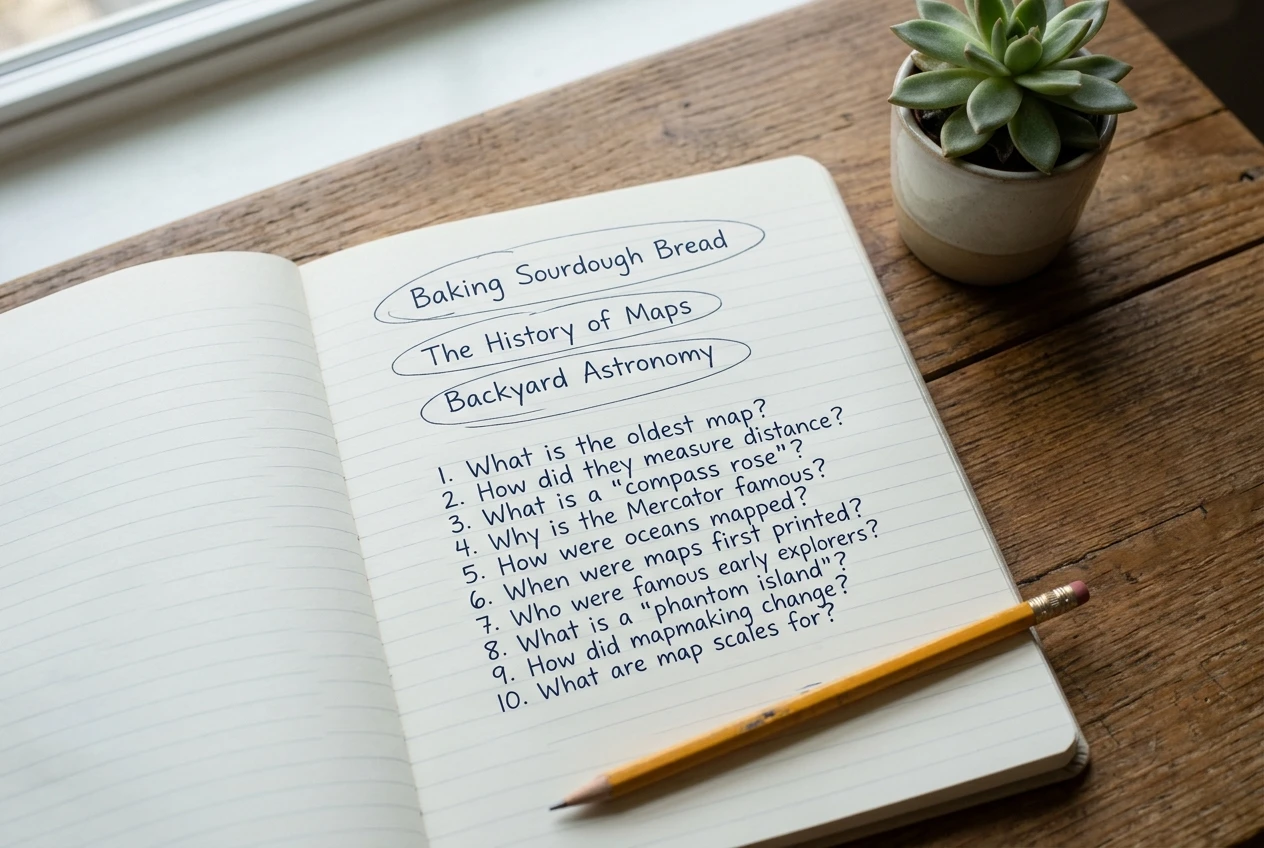
Write down two or three topics. For each one, list ten questions a beginner might ask about it. If you can list ten without effort, the topic has enough material. If you struggle to reach five, it may be too narrow, or you may not know it well enough yet to enjoy writing about it.
What you actually need to begin: a short, honest list
You do not need a company, a brand identity, or a large budget to start learning. Here is what you do need:
- A topic from the section above, even a provisional one.
- A computer and a reliable internet connection. A phone can help with research, but building and writing a website is far easier on a computer.
- A regular block of time. An hour a few times a week, kept up consistently, will teach you more than a single long weekend followed by nothing. Choose a slot you can realistically keep.
- A willingness to publish imperfect work. Your first articles will not be your best. Publishing them is how you get better, and almost nobody reads them closely at the start.
- Somewhere to learn the mechanics. You need to understand what a domain is, what hosting does, how a page gets built, and how to write for search. You can piece this together from many free sources, or follow a structured course.
Notice what is missing: a product, a customer list, and a finished plan. Those come later, once you know what you are building and who it is for.
It is also worth being clear about money. A website can earn income through methods like affiliate commissions, but nobody can tell you how much or how quickly, and anyone who does is guessing. Treat the early weeks as learning time, and decide what you are willing to spend before you spend anything.
The first few weeks, in the order that makes sense
The order matters because each step makes the next one easier. Here is a sequence for your first weeks.
Week one: settle your topic and look around
Pick your topic, even if you are only 70 percent sure. Then spend a few sessions reading what already exists about it. Look at the websites that rank for your topic’s questions and notice what they cover, what they skip, and what a beginner would still be left wondering after reading them. Keep a simple list of questions you could answer better or more clearly.
Next: learn the basics of a simple website
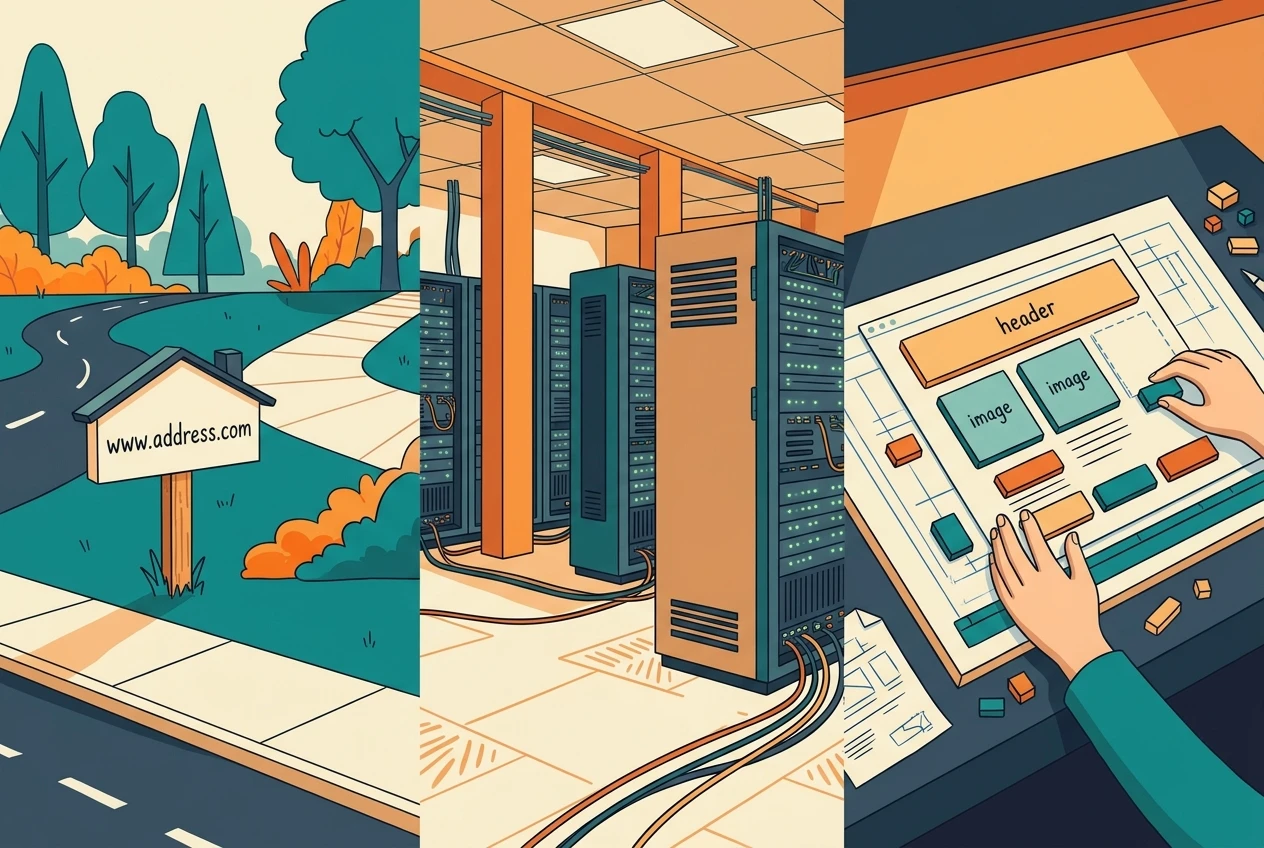
You do not need to build anything elaborate. Learn what the parts are: a domain name is your site’s address, hosting is where its files live, and a content system lets you create pages and posts without writing code. Learn how to set up a basic site with a few pages, such as a home page, an about page, and a place for your articles.
Keep the design plain. A clean theme with readable text serves a beginner site better than a custom look you spend three weeks on.
Then: publish your first pieces
Take the questions from week one and write articles that answer them. Aim for useful and specific rather than long. A good first article answers one question completely, in plain language, as if explaining it to one person.
A few habits help:
- Write one article at a time and publish it before starting the next.
- Use the question as the title, or close to it, so people searching for that question can recognise it.
- Add a short introduction that says what the reader will learn, and organise the body under clear headings.
- Re-read each piece once for anything vague, and replace it with a specific statement.
Ten or so published articles give you something real to look at. You can see which topics come easily, which are a struggle, and whether this subject suits you. That evidence is worth more than any amount of planning.
After that: decide how the site could earn
Only once you have a site with content on it does it make sense to think about monetisation. At that point you will have a clearer sense of your audience and what they need, which makes the choice far less of a guess.
Where beginners tend to get stuck, and how to keep going
Some sticking points come up again and again, and knowing them in advance makes them easier to handle.
Changing topics repeatedly. Each new idea looks more promising than the one you are working on. Set a rule: no switching until you have published at least ten articles on your current topic. By then you will know whether the problem is the topic or just the early stage.
Waiting until it is ready. A site is never finished, and your fifth article will make your first look weak. That is normal. Publish, and improve older pieces later.

Spending the time on setup. Logos, colour schemes, and tool comparisons feel productive but do not put useful content in front of readers. Limit setup tasks to what the site needs to function.
Expecting fast traffic. Search engines take time to find and trust a new site. Few visitors in the first weeks is ordinary and says nothing about your ability. Keep publishing and judge progress by what you have made, not by early visitor numbers.
Working alone. It is much easier to keep going when you can ask a question and get an answer. A community of people at a similar stage, or slightly ahead of you, helps with both the practical problems and the motivation.
How Wealthy Affiliate can walk you through it, and who it isn’t right for
Wealthy Affiliate is an online platform where people learn to build websites and earn income from them, usually, but not only, through affiliate marketing. It covers the same sequence described above: choosing a topic, building a site, and creating content. Inside the platform, the Learn tab holds the training, and live classes with their recordings sit in Live, inside Learn. There is also a member community where you can ask questions.
For a total beginner, the appeal is having those parts in one place and in a sensible order, so you are not assembling a plan from scattered sources. There is a free starter option, which lets you look around and judge the training and community for yourself before deciding anything further.
To be open about it: this site earns a referral commission if you join Wealthy Affiliate through my link, and that commission is recurring for as long as a referral stays subscribed. That is the reason this site exists, and I would rather you know it than wonder. Nothing in the platform can promise you income. What you get from it depends on the time you put in and what you do with what you learn.
Wealthy Affiliate may not be the right fit if:
- You want money quickly. Building a website that earns is slow work, and no platform changes that.
- You prefer to learn entirely on your own from free sources and already have a plan that works for you.
- You want a business that does not involve writing or creating content, since this approach depends on it.
- You are not prepared to set aside regular time each week.
If none of those describe you, and you want a structured place to begin with other beginners nearby, it is a reasonable place to start.
Your next small step today
You do not have to decide everything today. Do one small thing: write down two or three topics, and list ten questions a beginner might ask about each. That takes about half an hour, and it gives you the raw material for everything else.
When you are ready to see what a guided start looks like, look at Wealthy Affiliate through my referral link and begin with the free starter option to find out whether the training and community feel like the right place for you to begin.
Leave a Reply